Should Orthopedic Surgeons Emulate Spiders or Martians in their approach to Total Hip Replacement surgery?

Kambiz Behzadi
July 25, 2024

In the rapidly evolving field of orthopedic surgery, the quest for innovation is perpetual, especially in procedures like Total Hip Replacement (THR) where failure rates persist at around 13% within a decade. Addressing these challenges requires a nuanced understanding of both technological advancements and the intricacies of surgical techniques. In this context, the debate arises: Should orthopedic surgeons emulate Spiders or Martians in their approach to THR surgery?
Spiders, known for their intricate webs and strategic adaptations, epitomize the concept of extended cognition. They leverage their environment to augment their capabilities, exhibiting a decentralized and distributed information-gathering system. Martians, on the other hand, symbolize immense processing power, often associated with centralized control and high computational capacity. In the realm of THR, where precision and efficiency are paramount, the choice between these two approaches holds significant implications for surgical outcomes.
Despite advocacy for the integration of robotic assistance in THR, its adoption remains limited, indicating persistent challenges and barriers within the orthopedic community. Surgeons must pay a heavy price for information with the extra workflow, bulk and time added to the operation, all of which overwhelm the surgeon’s ability to process information. This necessitates a reassessment of surgical methods and the exploration of innovative approaches that strike a balance between human processing power and advanced technologies.
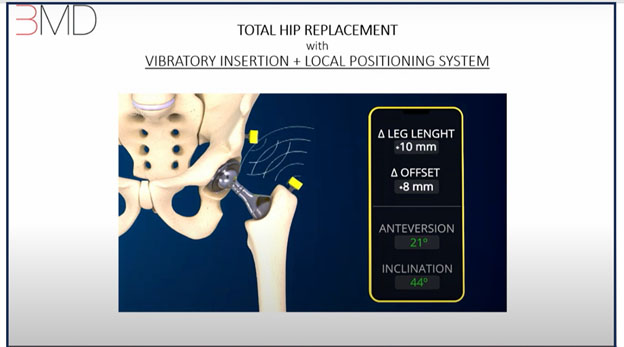
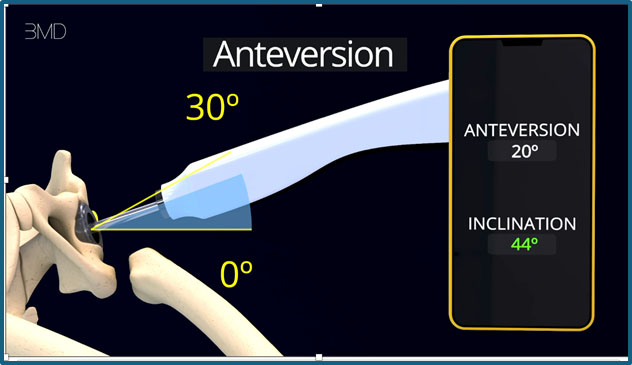
Central to addressing these challenges is the concept of decentralization. By shifting from centralized to decentralized and distributed information systems, surgeons can streamline decision-making processes and minimize cognitive overload. Embracing a modular approach to surgical tools, segregating tasks such as leg length and offset assessment from alignment evaluation, can enhance efficiency and precision. By strategically integrating sensors into instruments and the patient’s body, surgeons can overcome the pitfalls of information saturation associated with robotic platforms, leading to more precise bone preparation and implant alignment.
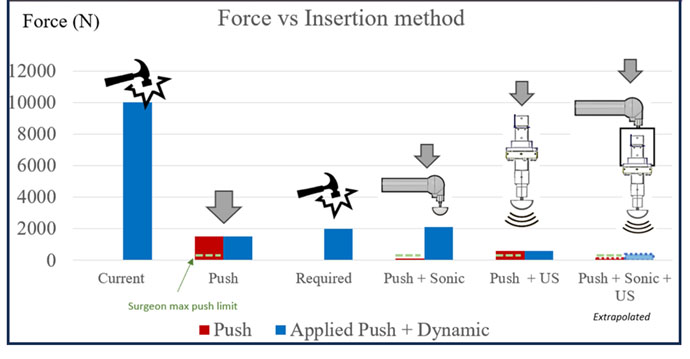
Proposed decentralizing changes aim to address the limitations of current approaches and improve surgical outcomes:
This distributed (as opposed to centralized) network of sensors streamlines decision-making and enhances surgeon’s abilities during surgery.
In conclusion, the choice between emulating Spiders or Martians in THR surgery represents a fundamental shift in surgical philosophy. By decentralizing sensors from robots to surgical tools and patients’ bodies, surgeons gain access to refined information, enhancing sensitivity and reducing the risk of iatrogenic injuries. These advancements have the potential to significantly reduce THR failures and improving patient outcomes and surgical efficacy.
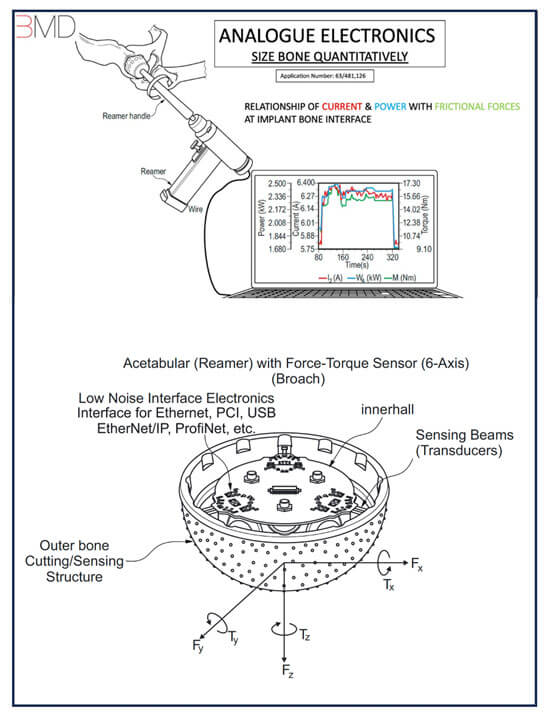
Yes, we can obtain a quantitative measurement of the mechanical stress response of bone along with its physical size during bone preparation, by utilizing analogue electronics to measure current and power consumption. These variables have a direct relationship with the Frictional forces that exist at the implant/bone interface, and therefore have utility in providing a method for tactile sizing of bone cavities. This method can be utilized to identify the elastic limit of bone and therefore the sweet spot of optimal stability for each individual patient.